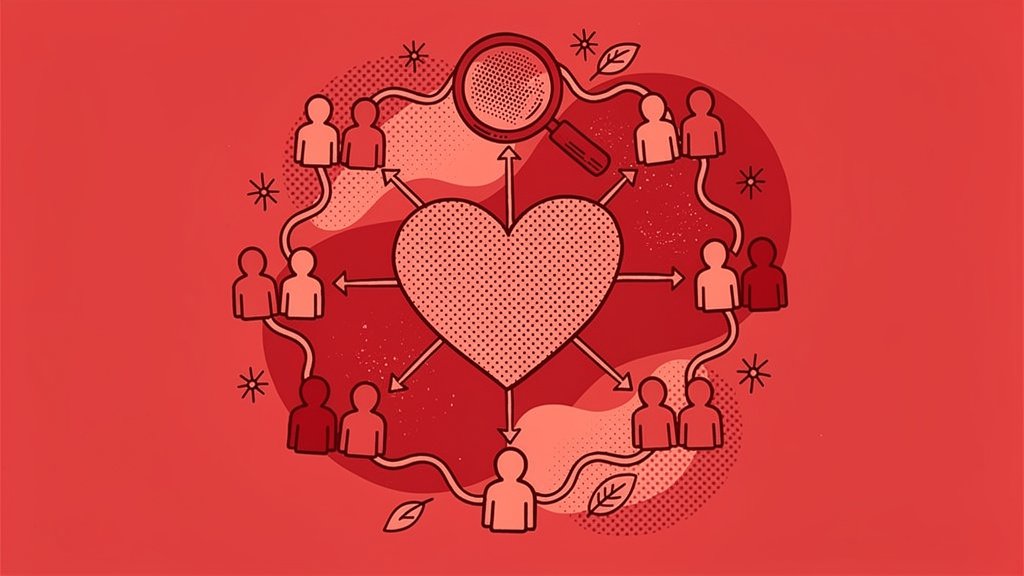
Losing a donor you never meant to lose is one of those quiet nonprofit heartbreaks nobody talks about enough. They gave, you were grateful, life got busy, and somehow the follow-up never happened. If that sounds familiar, you’re definitely not alone, and honestly, it’s not a reflection of how much you care. It’s a systems problem, and systems problems have solutions.
That’s exactly what this guide is about. We’re going to walk through what donor management software actually does (beyond the buzzwords), which features genuinely move the needle on retention, how to pick the right platform for where your organization is right now, and what the smartest nonprofits are doing to keep donors engaged for the long haul.
Why Donor Management Is a Survival Skill
Let’s start with the numbers that should keep every nonprofit leader up at night. The average donor retention rate sits at just 31.9% for Q3 2025 (Fundraising Effectiveness Project). For new donors specifically? A painful 14.0% (Fundraising Effectiveness Project). That means for every 10 first-time donors you bring in, roughly 8 or 9 won’t give again.
Meanwhile, retaining a donor costs 5-7x less than acquiring a new one (Bloomerang). The math is clear: your fundraising CRM isn’t just a nice-to-have. It’s your most important retention tool.
Here’s what strong donor management software actually does for relationship building:
- centralizes every interaction so nothing falls through the cracks: emails, event attendance, gift history, volunteer hours, all in one donor database,
- segments donors by behavior, not just dollar amount. Lapsed givers, monthly supporters, first-time donors, and major gift prospects all need different conversations,
- surfaces patterns you’d never catch manually, like the fact that recurring givers are retained at 83% compared to just 45% for one-time donors (Bloomerang).
Protip: If your organization is still managing donors in spreadsheets, start your transition by exporting your top 100 donors into a free-tier platform like Funraise. You’ll immediately see how much context you’ve been missing.
Core Features That Actually Move the Needle
Not all nonprofit CRM platforms are created equal. Some drown you in features you’ll never use. Others leave critical gaps. Here’s a breakdown of the features that directly impact donor retention and relationship quality:
| Feature | Why It Matters | What to Look For |
|---|---|---|
| Donor Profiles and Timelines | Full interaction history prevents awkward “remind me who you are” moments | Automatic logging of gifts, emails, event attendance |
| Engagement Scoring | Tells you who’s warming up and who’s cooling off before it’s too late | Scoring based on recency, frequency, and engagement depth |
| Segmentation | Enables tailored campaigns instead of blast-and-pray emails | Dynamic segments that update automatically |
| Automated Thank-Yous | Speed matters: donors who receive acknowledgment within 48 hours are significantly more likely to give again | Customizable templates triggered by gift amount or donor type |
| Reporting Dashboards | Tracks retention rates, lifetime value, and acquisition cost in real time | Custom report builders, not just pre-set views |
Platforms like Bloomerang lean into constituent timelines and generosity scores for predicting giving potential. DonorPerfect brings solid customizable workflows to the table. Funraise, on the other hand, bundles donor tracking with a full fundraising suite, which is genuinely handy if you’d rather not spend your afternoons stitching five different tools together.
What We See Go Wrong Before Teams Get the Right System
Working with nonprofits daily at Funraise, certain patterns come up again and again. See if any of these sound familiar:
1. The “We Have Data Everywhere” Problem. Gift records live in one spreadsheet, email engagement in Mailchimp, event RSVPs in Google Forms, and major donor notes in someone’s personal inbox. When that staff member leaves, so does the institutional knowledge. We see this weekly.
2. The Missed Major Gift Window. A mid-level donor increases their giving three times over 18 months, but nobody notices because there’s no engagement scoring or automated alerts. By the time someone spots the trend, the donor has already been approached by another organization with a better stewardship process.
3. The Thank-You That Never Happened. A donor gives $1,000 at a gala. The development director meant to send a personal note. Three weeks later, the donor gets a generic bulk email. The relationship cools. This is entirely preventable with automated donor stewardship paired with personal follow-up tasks.
Choosing the Right Platform for Your Size and Stage
Small organizations working with budgets under $500K should prioritize ease of use above everything else. You don’t need enterprise-grade complexity. You need something your two-person team will actually open every morning without dreading it.
Mid-size and growing organizations need scalability, solid integrations with tools like QuickBooks and Mailchimp, and reporting that doesn’t require a data analyst to interpret.
Funraise offers a free tier with no commitment required, which makes it genuinely low-risk to test drive. For larger nonprofits, the premium tier unlocks AI-powered forecasting and Fundraising Intelligence dashboards that have driven 7x online fundraising growth for users (Sisense). Their users also report 73% average annual online giving growth (Sisense), which is a pretty striking number when you sit with it.
Protip: Before committing to any platform, import a sample donor list into two or three tools and time how long setup takes. If it takes more than an hour to get a usable view of your donors, the tool is probably too complex for your team’s daily workflow.
Try this prompt in your favorite AI tool (ChatGPT, Claude, Gemini, Perplexity):
I run a nonprofit focused on [MISSION AREA] with approximately [NUMBER] donors. Our biggest donor relationship challenge right now is [CHALLENGE, e.g., low retention of first-time givers, no follow-up system for mid-level donors]. Suggest a 90-day donor stewardship plan using [SOFTWARE/TOOL] that includes segmentation strategy, communication cadence, and specific touchpoints to improve retention.Copy, paste, and customize the bracketed variables. That said, for daily nonprofit work, the most powerful AI isn’t the one you have to prompt manually. It’s the kind embedded directly in your workflow. Funraise’s built-in AI components operate with full operational context, meaning insights surface right where you’re already working, not in a separate chat window.
Advanced Tactics for Deepening Donor Relationships
Once your donor database is clean and your team is up to speed, it’s time to move beyond the basics. The organizations retaining donors at the highest rates lean on a mix of channels and genuinely personalized touchpoints:
- personalized impact reports sent quarterly. Something like “Your $250 gift provided 3 months of tutoring for Maria” hits differently than a generic update. Donors expect to know what their generosity actually made possible,
- phone stewardship for key segments. Post-gift phone calls drive a 38% repeat giving rate (Fundraising Effectiveness Project). Yes, actual phone calls. They still work, maybe more than ever,
- SMS and text-to-give integration for time-sensitive campaigns, where response rates can double compared to email-only approaches,
- VIP experiences for your top 10% of givers. We’re not talking expensive galas here. Behind-the-scenes tours, private impact briefings, or even a simple coffee with your executive director can go a long way.
Recurring giving programs deserve their own spotlight. Funraise users see 52% annual growth in recurring giving (Funraise), and recurring donors are dramatically easier to retain than one-time givers. Make the monthly giving ask a core part of your stewardship sequence, not something you tack on at the end as an afterthought.
“The nonprofits that win long-term aren’t just raising more money. They’re building infrastructure that makes every donor feel like the only donor. That’s what great software enables, but it starts with the decision to treat donor relationships as your most valuable asset.”
Funraise CEO Justin Wheeler
Measuring What Matters
You can’t improve what you don’t track. Here are the nonprofit KPIs your dashboard should be surfacing every single month:
- overall donor retention rate (target 45%+; the Fundraising Effectiveness Project benchmark for repeat donors is 43.6%),
- first-time donor retention (if you’re above 20%, you’re already beating the national average),
- donor lifetime value (LTV) by segment,
- acquisition cost vs. LTV ratio,
- recurring giving conversion rate.
Set automated alerts for at-risk donors, defined as anyone who hasn’t given in 12 or more months. Well-timed re-engagement sequences can recover 15-20% of your lapsed base before they’re gone for good (Bloomerang).
Protip: Run a monthly 15-minute “donor health check” with your team. Pull up your fundraising analytics dashboard, review at-risk donors, and assign one personal outreach task per team member. Consistency beats complexity every time.
Looking Ahead: AI and Predictive Fundraising
The next wave of donor retention tools is being shaped by AI, and it’s moving faster than most people expected. We’re talking predictive models that flag churn risk before it happens, hyper-personalized messaging built from donor history, and smart ask amounts calibrated to individual giving capacity.
And these aren’t hypothetical features on some distant roadmap. Funraise is already embedding predictive fundraising tools and AI-driven donor insights directly into its platform. For nonprofits thinking about 2026 and beyond, choosing a platform with a clear AI roadmap isn’t just a nice-to-have strategic consideration. It’s genuinely becoming table stakes.
Donor management software is the bridge between good intentions and actual relationship building. Start with a free tool, get your data centralized, and build from there. Your donors are already telling you what they need. The right system just helps you hear them.
About the Author


What is Important to Know About Salesforce Nonprofit Pricing Before Signing
Salesforce donates a lot of software to nonprofits. It's genuinely one of the more generous vendors out there. But here's the thing: "10 free licenses" tends to get translated in leadership's head as "the CRM is basically free," and that assumption has a way of unraveling right around year two, when extra seats, a consultant…

Advanced Mailchimp for Nonprofits: Hyper-Personalized Supporter Journeys
Why Journey-Based Personalization Is Worth the Effort Most nonprofits treat email like a megaphone. Send a blast, hope something sticks, repeat next month. But there's a better way, and honestly, it's not even that complicated once you see how the pieces fit together. It's called behavior-driven, hyper-personalized supporter journeys , and it's the approach quietly…
Best CRM for Nonprofits Comparison: Pricing, Integration & Ease of Use
Why Your CRM Choice Carries More Weight Than You Think Picking the right CRM for your nonprofit can feel a bit like choosing a new team member. It needs to show up reliably, play well with everyone else, and not cost you a fortune in the process. And yet, so many organizations end up locked…