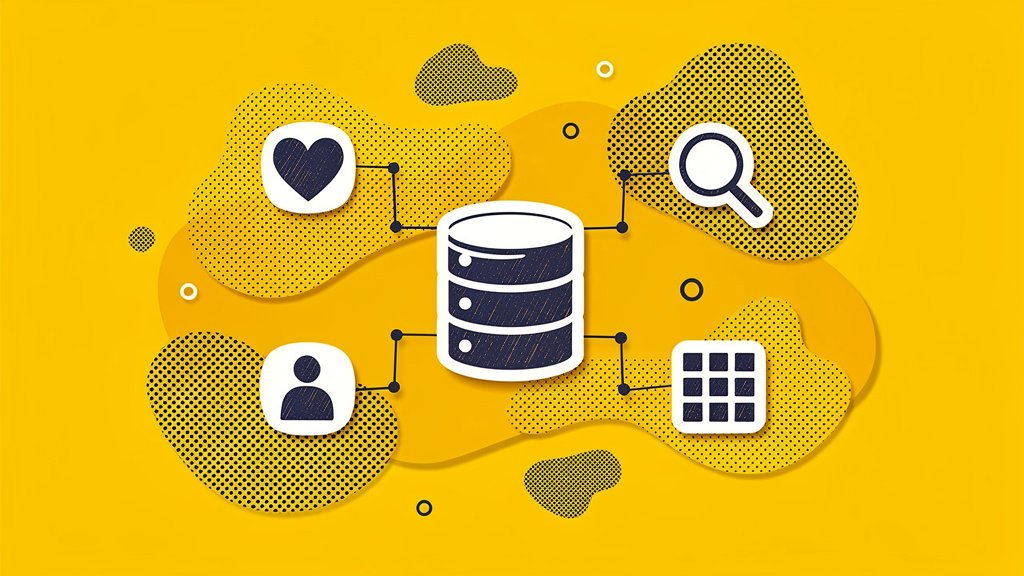
Nonprofit organizations run on relationships. And relationships run on data. But here’s the thing: for most nonprofits, that data is scattered across spreadsheets, inboxes, and sticky notes on someone’s monitor. Nonprofit database software exists to fix exactly that. Think of it as the central nervous system of your organization, one place where donor history, fundraising campaigns, volunteer activity, and program outcomes all live together.
In this article, we’re going to walk through what nonprofit database software actually is, the different types available, the most common challenges organizations face before making the switch, and how to implement one without losing your mind. Whether you’re just starting to explore your options or you’re ready to ditch the spreadsheet chaos for good, let’s figure this out together.
Understanding Nonprofit Database Software
Nonprofit database software is a cloud-based management tool that centralizes critical organizational data, including donor information, fundraising campaigns, volunteer activities, grant tracking, and program outcomes. You might hear it called a constituent relationship management (CRM) system, donor management software, or simply a nonprofit supporter database. The label doesn’t really matter. What matters is the core purpose: these platforms serve as the digital backbone for mission-driven organizations.
Rather than juggling spreadsheets across multiple departments, your team can store, organize, and access everything in one integrated system. And the real power? Getting a 360-degree view of every supporter relationship, from first gift to long-term partnership. Modern solutions go well beyond basic record-keeping. They enable strategic decision-making, compliance reporting, and personalized donor engagement at scale.
Protip: Before you start evaluating vendors, conduct an internal needs assessment. Survey staff across all departments to identify current data challenges and document both immediate needs and future growth aspirations. This single step prevents the most common implementation mistake: choosing software based on features you don’t actually need.
Why Nonprofit Database Software Matters Right Now
Here’s a stat that tends to stop people mid-scroll: the nonprofit industry experiences approximately 50% annual donor loss, yet organizations using analytics tools achieve 12% higher year-over-year donor retention rates by actively monitoring data and making informed decisions (Sisense). That gap between losing half your donors and keeping significantly more of them often comes down to one thing: whether your team has access to organized, actionable data.
Data-driven decision-making has shifted from a competitive advantage to a baseline requirement. The use of budgeting and planning tools among nonprofits rose from 18% in 2022 to 38% in 2025, reflecting a growing reliance on technology for daily operations (Articulate Foundation). And the broader market confirms this shift. The non-profit software market was valued at USD 4.95 billion and is growing at a CAGR of 7.88% to reach USD 7.24 billion by 2031 (Mordor Intelligence), with the fundraising software segment alone anticipated to exceed USD 9.5 billion by 2033 (Spherical Insights).
A lot of organizations are jumping on the bandwagon. But more importantly, the ones who do it thoughtfully are seeing real results.
The Nonprofit Database Software Landscape: Key Types
Nonprofit database software isn’t a monolithic category. Here’s how the landscape breaks down, along with what each type does best and where it falls short.
| Type | Best For | Trade-offs | Examples |
|---|---|---|---|
| Donor Management and CRM | Tracking donor interactions, gifts, pledges, and communication history | May lack depth in volunteer or program tracking | Bloomerang, Virtuous |
| All-in-One Platforms | Consolidating fundraising, volunteer management, program tracking, and financials into one system | Can have a steeper learning curve | Funraise, Bonterra, Salesforce Nonprofit Cloud |
| Specialized Niche Solutions | Specific workflows like event management, peer-to-peer fundraising, or grant tracking | Often requires integrating multiple tools together | Various point solutions |
| Open-Source Options | Budget-conscious organizations with technical staff | Requires significant in-house technical expertise to implement and maintain | CiviCRM |
For most small-to-midsize nonprofits just getting started, an all-in-one platform with a free tier is the most practical entry point. Funraise, for example, lets you start with no financial commitment and scale into premium features as your organization grows. That eliminates the risk of investing in software you might outgrow within a year.
Protip: If you’re currently using a patchwork of specialized tools, calculate the total cost of all subscriptions, integrations, and staff time spent moving data between systems. Many organizations discover they’re spending more on disconnected tools than a unified platform would cost.
What We See Daily: Common Challenges Before the Switch
Working with nonprofit leaders every day at Funraise, we encounter the same patterns repeatedly. These might sound familiar.
The “spreadsheet of spreadsheets” problem. A development director maintains a master Excel file with donor data, but the events team has their own spreadsheet, and the volunteer coordinator tracks hours in a Google Sheet. Nobody’s data matches. When the board asks for a unified report, someone spends an entire Friday manually reconciling numbers.
The duplicate donor dilemma. Without data integrity tools, the same supporter appears three times in your records: once as “Robert Smith,” once as “Bob Smith,” and once as “R. Smith” with a different email. Each entry has partial information. When you send a year-end appeal, Robert gets three letters and wonders if your organization is as disorganized as it appears.
The “we lost our institutional memory” crisis. A long-tenured development officer leaves, and suddenly no one knows which major donors prefer phone calls over emails, who already declined a planned giving conversation, or which foundation contacts have existing relationships with board members. Without a centralized database, relationships walk out the door with the people who built them.
Try This AI Prompt
Before we continue, here’s a practical prompt you can copy and paste into your preferred AI tool (ChatGPT, Claude, Gemini, Perplexity) to accelerate your database software evaluation:
I run a nonprofit focused on [MISSION AREA] with approximately [NUMBER OF DONORS] active donors and a team of [TEAM SIZE] staff members. We currently manage donor data using [CURRENT TOOLS, e.g., spreadsheets, basic CRM]. Generate a prioritized checklist of the 10 most important features I should look for in nonprofit database software, ranked by impact on donor retention and operational efficiency. For each feature, explain why it matters for an organization of our size.This will give you a customized evaluation framework in minutes. That said, in your daily nonprofit work, it’s worth investing in purpose-built solutions like Funraise that have AI components embedded directly into your operational workflows, providing full context without the copy-paste gymnastics between tools.
Essential Features: What to Prioritize
Not all database software delivers equal value. Finance leaders overwhelmingly prioritize systems that integrate financial reporting, donor tracking, and performance monitoring (Grassia Advisors). Beyond those essentials, here’s what your evaluation should cover:
- donor segmentation and tagging for personalized outreach based on giving history, interests, or capacity,
- real-time reporting and dashboards that give board members and program staff immediate visibility,
- automated workflows that handle donation acknowledgments, follow-up communications, and compliance reports without manual intervention,
- integration capabilities connecting your accounting software, email platforms, and payment processors,
- mobile accessibility so field staff and volunteers can access and update data anywhere,
- data integrity tools that identify duplicates and maintain data quality over time.
“The best nonprofit technology doesn’t just store data, it surfaces the insights your team would never have time to find on their own. That’s the difference between a database and a decision-making engine.”
Funraise CEO Justin Wheeler
Implementation: A Phased Approach That Actually Works
Transitioning to a new database doesn’t have to be overwhelming. Breaking it into four phases makes the whole thing feel a lot more manageable.
Phase 1: Assess and Plan. Inventory all current systems, data sources, and integration points. Define success criteria and KPIs like time savings, data quality improvements, and user adoption rates.
Phase 2: Research and Select. Build a shortlist from your needs assessment, request demos and free trials, and ask vendors specifically about data migration support and implementation timelines.
Phase 3: Data Migration and Setup. Audit your existing data for quality and completeness. Plan how old data fields map to the new system. Establishing data governance standards before launch is one of those unglamorous steps that saves a lot of headaches later.
Phase 4: Training and Adoption. Conduct role-specific training because fundraisers, program staff, and administrators all use different workflows. Assign a “data champion” on your team to ensure consistent data entry practices going forward.
Protip: Start with core donor management and layer in additional features (volunteer tracking, advanced analytics, program outcome measurement) over time. Organizations that try to implement everything at once consistently see lower staff adoption rates. Almost like trying to eat an elephant in one bite.
What Results Look Like
Funraise customers grow online donation revenue 73% year over year on average, 3x faster than the industry benchmark as tracked by M+R and Blackbaud (Funraise). These organizations also see donation form conversion rates of 50%, meaning half of website visitors who interact with their forms complete a donation (Funraise).
Meanwhile, AI adoption in nonprofits surged from 31% in 2024 to 48% in 2025, yet only 7% report major improvements in organizational capability (Nonprofit Pro). That tracks. Technology alone doesn’t create impact. Strategic implementation, proper training, and choosing tools that actually fit your workflows make the difference.
Moving Forward
Nonprofit database software is foundational infrastructure, not a nice-to-have. Whether you’re tracking your first 100 supporters or consolidating years of fragmented data, the right platform transforms how you engage donors, measure impact, and allocate resources.
If you’re ready to explore what an all-in-one platform can do for your organization, Funraise offers a free tier with no commitments, so you can test the waters before making any financial decisions. Start with your mission, assess your data challenges, and let the right technology work for you rather than against you.
About the Author

What is Important to Know About Salesforce Nonprofit Pricing Before Signing
Salesforce donates a lot of software to nonprofits. It's genuinely one of the more generous vendors out there. But here's the thing: "10 free licenses" tends to get translated in leadership's head as "the CRM is basically free," and that assumption has a way of unraveling right around year two, when extra seats, a consultant…

Advanced Mailchimp for Nonprofits: Hyper-Personalized Supporter Journeys
Why Journey-Based Personalization Is Worth the Effort Most nonprofits treat email like a megaphone. Send a blast, hope something sticks, repeat next month. But there's a better way, and honestly, it's not even that complicated once you see how the pieces fit together. It's called behavior-driven, hyper-personalized supporter journeys , and it's the approach quietly…
Best CRM for Nonprofits Comparison: Pricing, Integration & Ease of Use
Why Your CRM Choice Carries More Weight Than You Think Picking the right CRM for your nonprofit can feel a bit like choosing a new team member. It needs to show up reliably, play well with everyone else, and not cost you a fortune in the process. And yet, so many organizations end up locked…